Czech Senate Discussed Threats Arising from Reduced Support for Ukraine
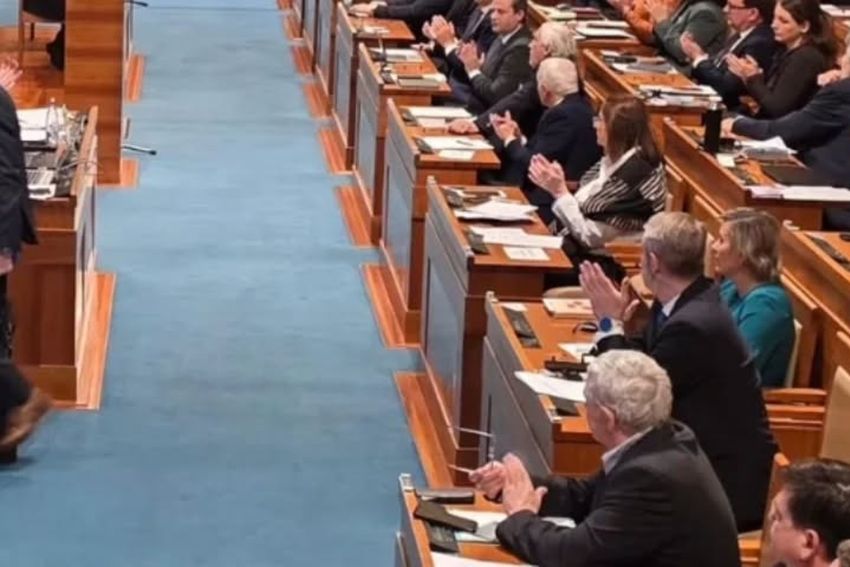
On February 24, 2026, the Senate of the Parliament of the Czech Republic held public hearings on the security of Ukraine, Europe, and the Czech Republic itself. With President Petr Pavel in attendance, participants debated the consequences of potentially reducing support for Ukraine and ways to strengthen the country’s defence capabilities.
The hearings were organised following a decision by the Senate plenary adopted a month before the event. Their aim was to provide the public with comprehensive information on how the Czech Republic is responding to Russia’s war against Ukraine, how it is strengthening its own defence capabilities, and how it is contributing to the security of all Europe.
Senate Chairman: Supporting Ukraine Is a Czech Security Issue
Senate Chairman Miloš Vystrčil opened the hearings by emphasising the connection between supporting Ukraine and the security of the Czech Republic itself — underlining that such support matters not only on moral grounds, but also for strengthening pan-European defence and protecting the country’s own interests.
Pavel Fischer, Chairman of the Senate Committee on Foreign Affairs, stressed the historic significance of the current conflict: “The front line stretches 1,300 km, which in scale takes us back to the times of World War II. But the methods of warfare and the overall picture of the battlefield have changed so much that we must not look away. On the contrary, our duty is to help the state that has been attacked. And our duty is to learn from Ukraine, which is fighting.”
President Pavel: Czechia Must Act Together with Its Allies
President Petr Pavel recalled that four years have passed since Russia launched its full-scale invasion of Ukraine. He noted that Ukraine’s sustained resistance is a testament to the resolve of its citizens, and emphasised that the security of modern states depends not only on the military: “In a modern conflict, what matters is not only the army, but the readiness of the entire society — its resilience, cohesion and ability to withstand threats.”
“If we do not want to end up in Russia’s sphere of influence again, we must act together. Our future lies alongside our allies in NATO and the EU,” the president stressed.
Experts: Betraying Ukraine Would Ultimately Threaten Czechia Itself
Particular attention was drawn to the contribution of security expert Vlastislav Břiza, who warned bluntly against reducing support for Ukraine: “If we betray Ukraine, abandon it, and after four years of resistance it falls — what then? Hypothetically, one day we could face not a one-million-strong Russian army, but a two-million-strong Russian-Ukrainian army. I ask you to factor this into your decisions.”
Expert Martin Kroupa, who has been actively visiting and supporting Ukraine since 2014, shared his key conclusion: the combination of society, politicians, and security forces has significantly contributed to Ukraine’s ability to resist such a powerful enemy.
Ukrainian Institute Director: Support for Ukraine Was Unanimous
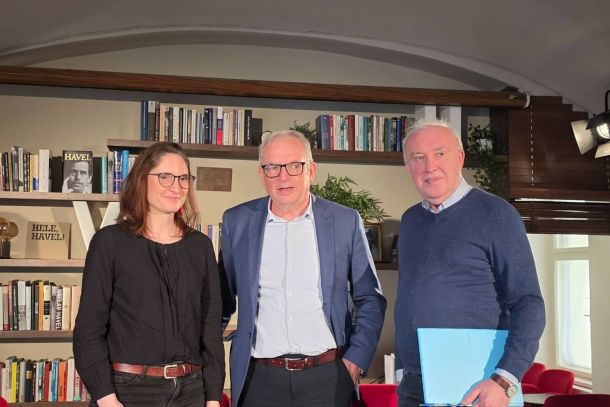
Rostyslav Prokopyuk, Director of the Ukrainian Institute in Prague, who also took part in the hearings, noted that the speeches by senators and guests were marked by a spirit of support for Ukraine. Particular recognition was given to the Coalition of the Willing and the Czech ammunition initiative for Ukraine.
One senator, however, stated that the only path forward is negotiations with Putin — a position that drew a sharp response from colleagues in subsequent contributions.
Debate on Transferring L-159 Aircraft
The Czech political scene is also debating the sale of L-159 light fighter jets to Ukraine. President Pavel had been considering providing four such aircraft, which could effectively destroy enemy drones. However, this initiative met with criticism from other senior officials.
The hearings were attended by senators, the Chief of the General Staff, the Deputy Minister of Defence, and other security experts. They served as further confirmation that support for Ukraine remains one of the key issues in Czech foreign and security policy.