“Ukrainian Golgotha”: Yaroslava Muzychenko Lectures on Easter and Resurrection
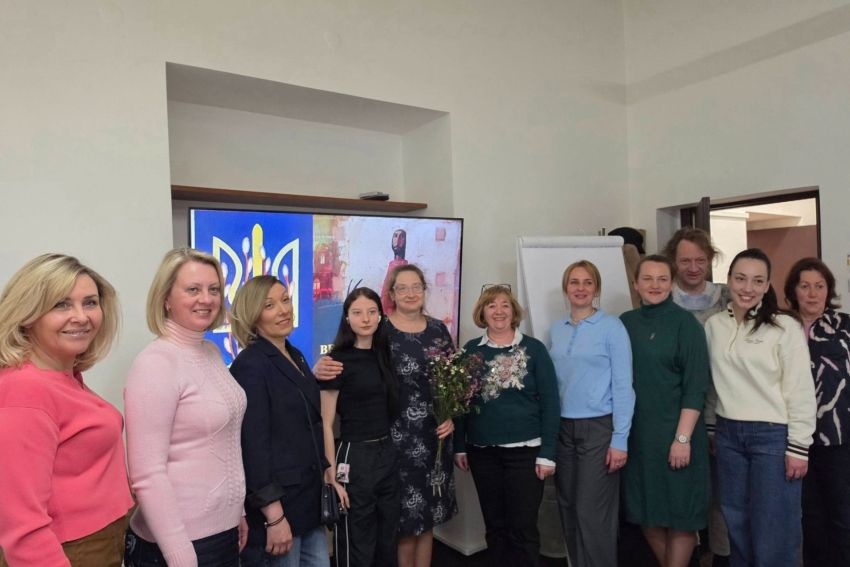
The meeting with Yaroslava Muzychenko, “Easter in Ukrainian Culture”, left a profound and extraordinary impression. The event was organised by the Ukrainian Institute in Prague in cooperation with the Pylyp Orlyk Foundation, bringing together all those who care about Ukrainian culture and its deep connection to faith and memory.
The lecturer explored a rich palette of artworks and authors who engaged with the themes of Easter, the Resurrection of Christ, and the resurrection of the spirit of the soldier-defender in the war against Russia. Through art and word, an unbreakable faith in Ukraine’s Victory resonated throughout.
“Ukrainian Golgotha”: Suffering as a Path to Resurrection
The central concept of the lecture was the “Ukrainian Golgotha” — a metaphor symbolising centuries of suffering, repression, and sacrifice of the Ukrainian people on their path to independence. The term encompasses the tragic pages of history: the Holodomors, wars, political persecutions of the 20th century, and the ongoing struggle against Russian aggression.
In 1939, Petro Andrusiv painted “Golgotha” — a crucifixion of Ukraine encompassing the fallen, the orphaned, and shattered destinies, compared to the Via Crucis of Jesus Christ. Dmytro Solovei, in his work “Ukraine’s Golgotha”, described the terror that followed the liberation struggles. The expression “to walk one’s Golgotha” signifies great suffering — but also the hope of resurrection.
Pain and Hope: What Ukrainian Art Tells Us Today
Yaroslava Muzychenko’s lecture carried deep pain — but also hope for resurrection, victory, and unwavering faith. Easter emerges here not merely as a religious holiday, but as a symbol of the rebirth of a people who, despite everything, continue to fight and believe.
We are sincerely grateful to everyone who joined the meeting. Follow the Ukrainian Institute’s page — let us be together, let us stand side by side.